Aligning your physical appearance with your gender identity represents a deeply personal journey requiring surgical expertise, compassionate care, and understanding of the unique challenges transgender and non-binary individuals face. Gender-affirming surgery can significantly improve quality of life, reduce gender dysphoria, and support authentic self-expression.
At Chrisalys, we provide respectful, expert surgical care to transgender and non-binary patients throughout Los Angeles and Beverly Hills seeking procedures that help them live authentically and comfortably in their affirmed gender.
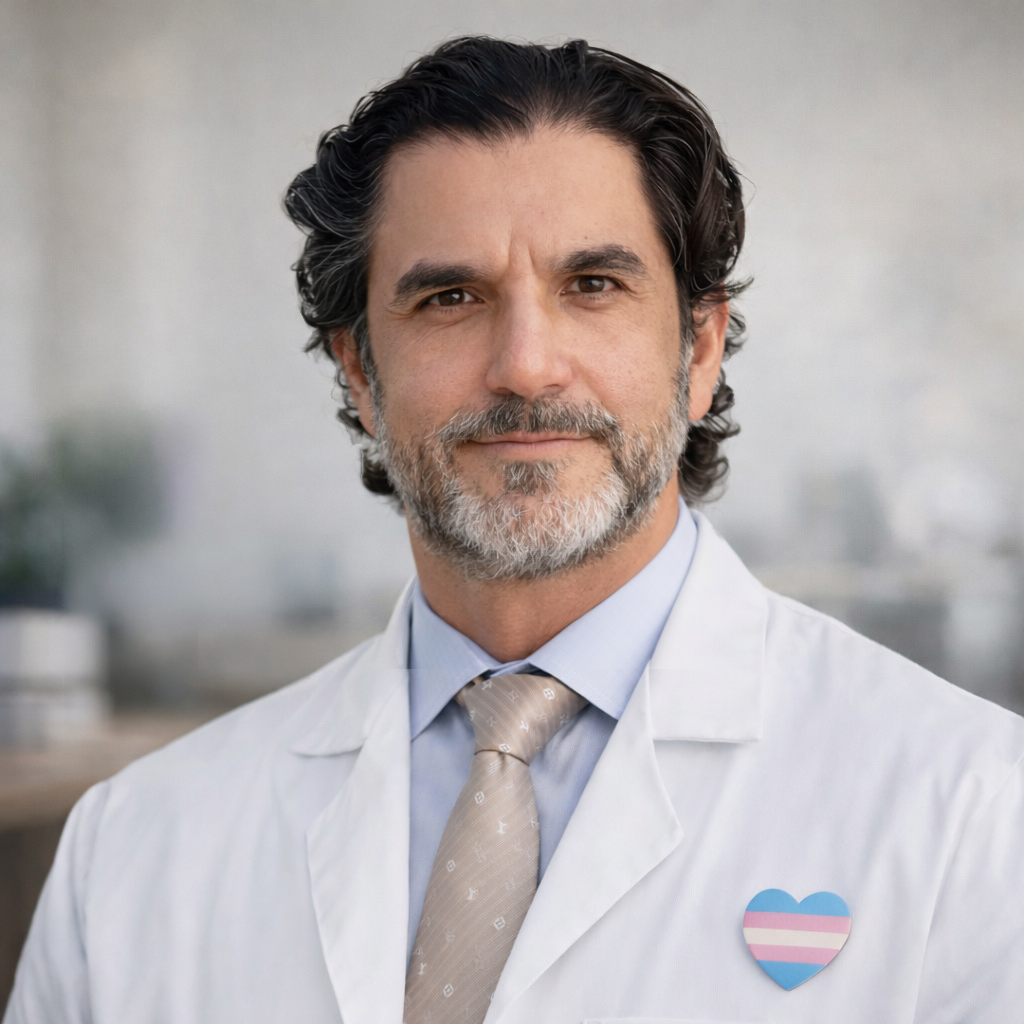
Dr. David N. Sayah is a board-certified plastic surgeon with over 26 years of experience performing body contouring and chest surgery procedures. His specialized training at UCLA Medical Center and NYU Medical Center, combined with his artistic background and commitment to personalized care, enables him to deliver natural-looking results tailored to each patient’s goals.
I was referred by a close friend that swore Dr. Sayah would change my life. Over the years I met with so many doctors that kept making me feel unheard and unsure of their recommendations. Once I walked in the office I felt so comfortable. Dr. Sayah addressed all my concerns gave me his recommendations and asked I give it a try first before doing anything else. I trusted him and my gut and let me tell you he was right! If you want someone you can trust and get the results you dreamed of then you don’t need to look any further! Thank you to Dr. Sayah and his wonderful team

Understanding Transgender Surgery
Gender-affirming surgery encompasses various surgical procedures designed to help transgender and non-binary individuals align their physical characteristics with their gender identity. These procedures can dramatically improve psychological wellbeing, reduce gender dysphoria, and enhance quality of life by creating physical characteristics that match one’s authentic gender expression. The decision to pursue surgical intervention is deeply personal, and the specific procedures chosen depend on individual goals, medical considerations, and the vision each patient has for their body.
Professional medical organizations including the World Professional Association for Transgender Health (WPATH) have established Standards of Care that guide evaluation and treatment for individuals seeking gender-affirming procedures. These standards ensure patients receive appropriate psychological support, counseling, and medical evaluation before surgery, optimizing both safety and satisfaction with outcomes. Insurance coverage for medically necessary gender-affirming procedures has expanded significantly, with many plans now covering surgical interventions when specific criteria are met and proper documentation is provided.
“Gender-affirming surgery requires not only technical surgical skill but also deep respect for each patient’s journey and individual goals,” Dr. Sayah explains. “My role is to listen carefully, understand what physical changes will be most meaningful for each person, and deliver surgical outcomes that support authentic self-expression and wellbeing. Every patient deserves compassionate, expert care provided in an environment of respect and understanding.”
What to Expect with Chest Masculinization
Chest masculinization is typically performed under general anesthesia and requires approximately two to four hours depending on the technique used and extent of tissue requiring removal. Most patients return home the same day or after overnight observation. Dr. Sayah places surgical drains temporarily to prevent fluid accumulation, typically remaining for one to two weeks. Compression garments worn continuously for several weeks support healing and help chest contours settle smoothly.
Initial recovery involves moderate discomfort managed with prescribed pain medication. Most patients return to desk work within one to two weeks and gradually resume normal activities over four to six weeks. Strenuous upper body exercise and heavy lifting must be avoided for at least six weeks to allow proper healing. Results are immediately visible, with final chest contours emerging over several months as swelling resolves and tissues settle completely.
Chest Masculinization Surgery (Top Surgery for Transgender Men)
Chest masculinization, commonly called top surgery or FTM (female-to-male) top surgery, creates masculine chest contours for transgender men and transmasculine individuals. The procedure removes breast tissue and excess skin, resizes and repositions the nipple-areola complex, and sculpts the chest to create appearance typical of cisgender males. This surgery significantly reduces gender dysphoria for many transmasculine individuals and allows comfortable participation in activities without binding or chest concealment.
Surgical Techniques for Chest Masculinization
- Double Incision with Free Nipple Grafts: The most common technique for chest masculinization, this approach works well for patients with larger breasts or significant skin excess. Incisions are placed horizontally across the lower chest at the border of the pectoral muscle. Breast tissue and excess skin are removed completely, creating a flat, masculine chest contour. The nipples and areolas are removed, resized to appropriate masculine proportions, and repositioned as free grafts on the sculpted chest. While this technique creates visible horizontal scars across the chest, it provides excellent results with maximum tissue removal and optimal nipple positioning.
- Periareolar (Keyhole) Technique: For patients with smaller breasts and good skin elasticity, this less invasive approach removes breast tissue through a semicircular incision around the lower half of the areola. The nipple remains attached to its original blood and nerve supply, potentially preserving more sensation. This technique creates minimal scarring limited to the areola border, but provides more modest tissue removal and works best for patients with minimal breast tissue and excess skin.
- Inverted-T or Buttonhole Technique: An alternative approach for patients with moderate breast size, this technique preserves the nipple on a pedicle of tissue maintaining its blood and nerve supply. The method provides better nipple sensation preservation compared to free nipple grafts while still allowing substantial tissue removal. Scarring follows an anchor or inverted-T pattern on the chest.


Chest Feminization (Top Surgery for Transgender Women)
Chest feminization, or MTF (male-to-female) breast augmentation, creates feminine breast contours for transgender women and transfeminine individuals. The procedure involves breast implant placement to develop breast volume, shape, and projection typical of cisgender females. Many transgender women experience some natural breast development from hormone therapy, but surgical augmentation often proves necessary to achieve desired breast size and create feminine chest appearance.
Breast Augmentation for Transgender Women
Breast augmentation for transgender women follows similar principles to augmentation for cisgender women but requires special consideration of chest anatomy, existing tissue characteristics, and aesthetic goals specific to transgender patients. The broader, more muscular chest wall typical of individuals assigned male at birth may require different implant selection, placement techniques, and sizing approaches to create natural-looking feminine breast contours.
Dr. Sayah uses various implant types including silicone gel and saline implants in multiple shapes and profiles to customize results for each patient’s anatomy and preferences. Implants can be placed beneath the pectoral muscle (submuscular) or above the muscle beneath breast tissue (subglandular), with placement decisions based on tissue characteristics and desired aesthetic outcomes. Incision options include inframammary (breast crease), periareolar (around areola), or transaxillary (armpit) approaches, selected to minimize visible scarring while allowing optimal implant positioning.
Timing Considerations for Chest Feminization
Many surgeons and insurance companies request one year of feminizing hormone therapy before authorizing breast augmentation to maximize natural breast development before determining appropriate implant size. Hormone therapy alone creates breast development in most transgender women, but the degree of growth varies significantly among individuals. Surgical augmentation builds upon existing hormone-induced breast tissue to achieve fuller, more proportionate breasts that better match the patient’s desired appearance and body proportions.
Recovery After Breast Augmentation
Recovery from breast augmentation typically involves moderate discomfort for several days, well-managed with prescribed pain medication. Most patients return to light activities and desk work within one week and gradually resume normal activities over four to six weeks. The chest must be supported with surgical bras, and strenuous upper body activity should be avoided during initial healing. Final results emerge over several months as swelling resolves, tissues settle, and breast implants assume their optimal position.
Who Benefits from Gender-Affirming Chest Surgery in Los Angeles
Ideal candidates include individuals with clear, consistent gender identity and persistent gender dysphoria that surgical intervention can meaningfully address:
- Comprehensive psychological evaluation confirming readiness for surgery with realistic expectations
- Good overall physical health with chronic medical conditions well-controlled
- For chest masculinization: typically age 18 or older when breast development is complete
- For chest feminization: at least one year of feminizing hormone therapy to maximize natural development
- Non-smokers or willing to quit at least six weeks before and after surgery
- Commitment to post-operative care including compression garments, follow-up appointments, and activity restrictions
Additional Gender-Affirming Procedures
Beyond chest surgery, Dr. Sayah’s expertise in body contouring and facial procedures may benefit patients seeking additional surgical interventions. Liposuction and fat grafting can create more feminine curves or masculine body contours through strategic fat removal or transfer. Facial procedures including rhinoplasty, chin augmentation or reduction, and facial contouring may support feminization or masculinization goals. Revision procedures address complications or refine results from previous surgeries for improved outcomes.

Frequently Asked Questions About Gender-Affirming Surgery
-
Many insurance plans now cover medically necessary gender-affirming procedures when specific criteria are met including documented gender dysphoria, psychological evaluation, and letters of support from mental health providers. Coverage varies significantly by insurance carrier and individual policy. Our team assists with insurance verification, pre-authorization, and documentation to maximize coverage when applicable.
-
For transmasculine individuals, chest masculinization can typically proceed regardless of hormone therapy duration. For transfeminine individuals seeking breast augmentation, most surgeons recommend at least one year of hormone therapy to maximize natural breast development before determining appropriate surgical intervention and implant sizing.
-
Nipple sensation preservation depends on surgical technique used. Free nipple grafts used in double incision chest masculinization typically result in decreased or absent nipple sensation, though some patients regain partial sensation over time. Techniques preserving nipple on a pedicle maintain better sensation. For breast augmentation, most patients maintain nipple sensation though temporary changes are common during healing.
-
Risks include those common to any surgery including infection, bleeding, fluid accumulation, poor wound healing, asymmetry, and anesthesia complications. Specific to chest masculinization, risks include nipple graft loss, contour irregularities, and persistent dysphoria if results don’t meet expectations. For breast augmentation, risks include capsular contracture, implant rupture, and typical augmentation complications. Dr. Sayah’s extensive experience minimizes these risks through meticulous surgical technique and comprehensive pre-operative planning.
-
Scarring depends on surgical technique selected. Double incision chest masculinization creates visible horizontal chest scars that fade over time but remain permanent. Periareolar techniques produce minimal scarring around the areola. For breast augmentation, incision placement determines scar visibility, with inframammary scars hidden in the breast crease and periareolar scars blending with the areola border. Dr. Sayah’s meticulous closure technique promotes optimal healing and minimal scar visibility.
-
Some complementary procedures can be safely combined with chest surgery, while others should be staged separately. Dr. Sayah discusses optimal surgical planning during consultation based on your specific goals, safety considerations, and recovery capacity. Combining procedures can reduce overall recovery time but increases surgical duration and complexity.
Why Choose Dr. Sayah for Gender-Affirming Surgery
Dr. Sayah’s comprehensive training at UCLA Medical Center includes extensive experience with chest surgery, body contouring, and reconstructive procedures applicable to gender-affirming care. His 26 years of surgical experience encompasses numerous breast and chest procedures, providing the technical expertise necessary for excellent gender-affirming surgical outcomes.
As a board-certified plastic surgeon and Fellow of the American College of Surgeons, Dr. Sayah maintains the highest standards of surgical excellence and patient safety. His artistic background provides the aesthetic sensibility necessary for creating natural-looking results that honor each patient’s vision for their body. His commitment to personalized, compassionate care ensures every patient feels respected, understood, and supported throughout their surgical journey.
Our fully accredited surgery center in Beverly Hills features state-of-the-art equipment and maintains rigorous safety protocols. Dr. Sayah personally oversees every aspect of care from consultation through long-term follow-up, ensuring you receive individualized attention and comprehensive support essential for successful outcomes and positive surgical experiences.
Meet Dr. David Sayah
Dr David Sayah is a board certified plastic surgeon in Beverly Hills known for his natural approach to aesthetic surgery. With more than 26 years of experience, he combines surgical precision with artistic insight to deliver balanced and refined results. His philosophy centers on enhancing individual beauty rather than changing it.
A graduate of the UCLA School of Medicine and a Fellow of the American College of Surgeons, Dr Sayah trained at leading medical centers including NYU and UCLA. His work in wound healing and scar formation research helps patients heal beautifully with minimal scarring. Fluent in five languages, he welcomes patients from Beverly Hills, Los Angeles, and across the world who seek exceptional, natural results.
Schedule Your Gender-Affirming Surgery Consultation in Beverly Hills
If you’re considering gender-affirming chest surgery to support your transition and reduce gender dysphoria, Dr. Sayah offers expert surgical care provided with compassion, respect, and commitment to your individual goals. Contact Chrisalys today to schedule your confidential consultation and discover how gender-affirming surgery can help you live authentically and comfortably in your affirmed gender.