
Rapid, significant weight loss can change the face in ways many people don't anticipate. The term "ozempic face" describes the hollowing, skin laxity, and facial volume loss that can follow GLP-1 medications like semaglutide, a shift that happens because fat is lost quickly, often faster than skin can adapt. For some, these changes are simply cosmetic. For others, particularly those considering or recovering from gender-affirming facial surgery, they carry deeper significance.
At Chrisalys Clinic, we approach this conversation with care rather than alarm. Facial harmony depends on volume, contour, and proportion, and substantial weight loss can alter all three, sometimes softening the very features a procedure was designed to refine. Understanding how weight changes interact with surgical planning allows us to time treatment thoughtfully and set realistic expectations. Whether you are currently taking a GLP-1 medication, have recently reached your goal weight, or are still on that journey, the right sequence matters. A private consultation is the best place to begin.
What Is ozempic face?
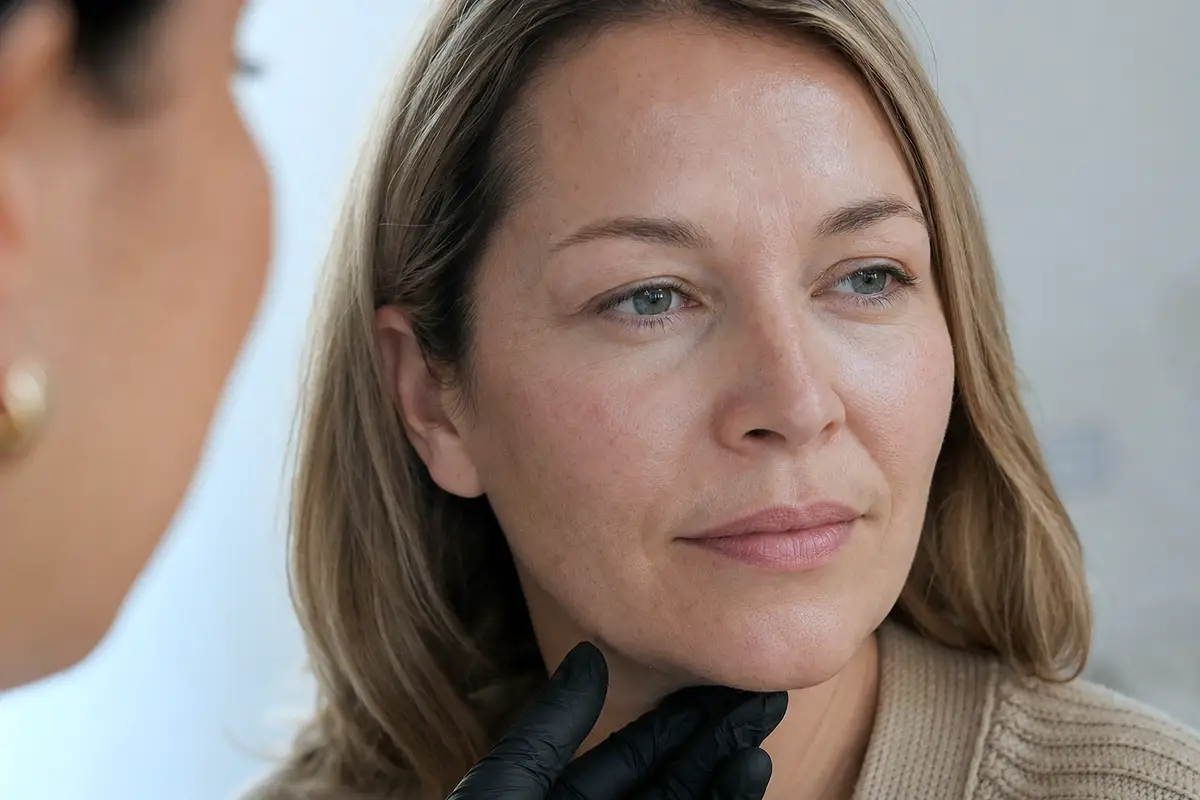
"Ozempic face" is an informal term that entered public conversation as GLP-1 medications, semaglutide and similar drugs, became widely used for weight management. It describes the facial changes that can follow rapid or substantial weight loss: hollowing of the cheeks, more visible bone structure, softening along the jawline, and skin that appears looser or less supported than before. The phrase is somewhat misleading, since the medication itself does not act on the face. The changes come from fat loss generally; the face simply reveals it sooner and more noticeably than other areas.
Facial fat is not cosmetic filler, it provides structure, contour, and a sense of softness that many people associate with health and vitality. When that volume diminishes quickly, the skin may not retract at the same pace, particularly for patients in their forties and beyond, or those whose skin has reduced elasticity. The result can feel discordant: a body that reflects the patient's goals, paired with a face that reads as tired or gaunt to others.
At Chrisalys Clinic, this topic matters in a specific context. Many patients pursuing gender-affirming procedures have also undergone meaningful body changes, whether through medication, hormones, or other paths. Facial volume is central to how gender is read, the fullness of the cheeks, the softness of the midface, the line of the jaw. Understanding how weight loss reshapes these features allows for more thoughtful planning, whether the goal involves restoring volume, refining contour, or simply timing a procedure well.
The term itself is a media shorthand, not a diagnosis. What it points to, however, is real, and addressable with careful, individualized consultation.
Key Benefits of ozempic face
Rapid weight loss from GLP-1 medications has introduced a new consideration in aesthetic medicine, often called ozempic face, the hollowing, skin laxity, and loss of facial fullness that can follow significant body weight reduction. While the term itself describes a challenge rather than a benefit, understanding and addressing it offers genuine value, particularly for patients pursuing gender-affirming facial procedures.
Facial volume planning becomes more precise. When a surgeon accounts for medication-related volume loss before operating, the surgical plan reflects the face as it actually is, not as it was. This leads to more accurate contouring, better implant sizing, and filler or fat grafting decisions that age gracefully alongside the patient.
Results align with the patient's affirmed identity. For many patients, weight loss is part of a broader journey of self-definition. Restoring balanced facial volume in a way that supports feminization or masculinization goals means the face reads as intentional and harmonious, rather than simply thinner or gaunt. The value here is coherence, every element working toward the same outcome.
Skin quality concerns are surfaced early. Ozempic face often involves reduced elasticity as well as volume loss. Addressing it prompts an honest conversation about skin behavior, healing timelines, and whether complementary treatments such as resurfacing or tightening procedures may be appropriate. Patients enter surgery with realistic expectations and a complete picture.
Longevity of results improves. Volume restored thoughtfully, through fat grafting or carefully placed structural support, tends to settle naturally and endure. Rushed corrections made without understanding the underlying cause often need revision.
The consultation itself gains depth. Discussing ozempic face invites a fuller review of medical history, medication plans, and future weight trajectory. That context protects both the outcome and the patient.
At Chrisalys Clinic, these conversations are handled quietly and thoroughly, ensuring facial work reflects each patient's goals with subtlety and care.
How ozempic face Works

The phrase "Ozempic face" has entered common conversation, but the mechanism behind it is neither mysterious nor unique to one medication. It describes the facial changes that can follow significant, relatively rapid weight loss, something increasingly relevant to patients preparing for or recovering from gender-affirming surgery.
The mechanism, step by step:
1\. Appetite suppression and reduced intake. GLP-1 medications like semaglutide slow gastric emptying and act on appetite centers in the brain. Patients eat less, often substantially less, and weight comes down steadily.
2\. Fat loss occurs throughout the body. The body doesn't choose where fat diminishes first. Subcutaneous fat pads in the cheeks, temples, and periorbital region, the very structures that give the face softness and contour, shrink alongside fat elsewhere.
3\. Speed outpaces skin adaptation. Skin has some capacity to retract, but that process is slow. When volume disappears faster than skin can adjust, laxity results. Hollowness under the eyes, deeper nasolabial folds, and mild jowling become more visible.
4\. Structural support diminishes. Facial fat doesn't simply fill space; it supports overlying tissue. Its loss subtly shifts how light and shadow fall across the face, which can read as aging or fatigue even in younger patients.
Why this matters for our patients. Facial fat distribution carries gendered meaning. Fuller midface volume is often read as feminine; sharper, leaner contours as masculine. Rapid weight change can therefore shift facial gender perception in ways that either support or complicate a patient's goals.
At Chrisalys Clinic, we consider these changes as part of a broader plan. Some patients find the leaner result aligns naturally with their aims. Others may benefit from staged facial procedures, fat grafting, or simply timing surgery after weight has stabilized. A consultation allows us to map that sequence thoughtfully, with no pressure and no assumptions.
Common Questions About ozempic face
What exactly is ozempic face? It describes the facial volume loss and skin laxity that can follow rapid, significant weight reduction while taking GLP-1 medications such as semaglutide. Cheeks may appear hollow, and skin around the jawline and eyes can look looser. The term is informal, but the underlying changes are real and well documented.
Will it affect my gender-affirming facial surgery? It can. Facial feminization or masculinization procedures are planned around your existing soft tissue and bone structure. If your weight is still shifting, surgical outcomes may be harder to predict. Most surgeons prefer that your weight remain stable for several months before proceeding.
Is the change permanent? Not always. Some volume returns when weight stabilizes. For others, the changes persist, and options such as fat transfer or dermal fillers may be discussed as part of a broader surgical plan. Your anatomy and goals guide that conversation.
Should I stop taking my medication before surgery? Never stop a prescribed medication without speaking with your prescribing physician. GLP-1 drugs can affect anesthesia timing and gastric emptying, so your surgical and anesthesia teams need to know everything you take. Coordination between providers is routine and discreet.
Can surgery correct ozempic face? In many cases, yes. Fat grafting, lifting techniques, and contouring can restore balance, sometimes alongside affirming procedures. Suitability depends on your health, skin quality, and weight stability.
How do I begin? A private consultation allows the team to review your medications, timeline, and goals, then build a plan paced to you. Costs vary by procedure and should be confirmed directly with the practice.
Conclusion
Rapid weight loss, whether from Ozempic or other GLP-1 medications, can change facial volume in ways that matter for anyone considering gender-affirming surgery. The good news is that these changes are understood, predictable, and planable around.
A few points to carry with you: timing matters, so stabilizing your weight before surgery typically leads to more reliable outcomes. Facial fat redistribution can affect both surgical planning and results, which makes honest conversation with your surgeon essential. And options exist afterward, from fat grafting to fillers, should volume restoration feel right for you.
If you are taking a GLP-1 medication and thinking about facial feminization, masculinization, or related procedures, the most useful next step is a consultation. Bring your medication history, your goals, and your questions. At Chrisalys Clinic, that conversation is private, thorough, and shaped entirely around where you are and where you want to be.
Learn more about Hair Removal for Gender-Affirming Surgery.